
What’s the difference between plain and plane?
Plain and plane are easily confused in English – they are homophones, so you may write one when meaning the other. They have a number of distinct definitions where their meanings are completely different – but one meaning where their meanings are very...
Where are prepositions placed in English sentences?
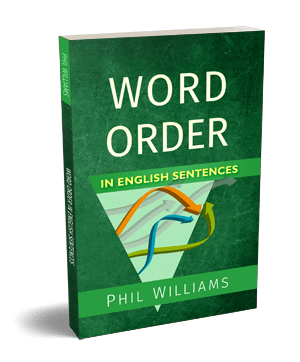
How can we define the rules for placing a preposition in a sentence? Before a noun? After a verb? One of the additions to the second edition of Word Order in English Sentences is a guide to prepositions. Though they are often connected to other parts of a sentence,...
Why we say 21st Century for years starting 20…
The way we describe ages, including years or people’s ages, can sometimes seem strange if you consider that years beginning “20” are referred to as “21st Century” (and similarly, years starting “19” were the “20th Century”). There is a very logical reason for this,...
The Impact of Dickens’ Christmas Carol – in Language and Culture
In 1843, Charles Dickens wrote a novella called A Christmas Carol, a story still told today. The story followed a miser (a nasty man who does not want to share his wealth) on Christmas Eve, as he is visited by three spirits that teach him about kindness and caring....How to use suffixes to create nouns from adjectives and verbs
Many words in English can be adapted to be used for different grammatical functions. We often use prefixes and suffixes (extra parts of the word added at the beginning or the end) to change the meaning of a word for a variety of purposes. Adjectives and verbs can be...Want to Master English?
ELB has produced a series of bestselling English guides, available from all major retailers, with over 45,000 copies sold worldwide. Click a cover to learn more!