8 grammar rules for writing newspaper headlines
Reading newspaper articles is an excellent way for foreign learners to build vocabulary and practice comprehension using real material. It can expose you to different topics, and a variety of language that is rare in spoken English. However, newspaper writing is...Transitive and intransitive verbs: verbs and objects
Verbs, doing words, tell us what the subject is doing. This usually takes the form of an action, though it can also be a state or an event. Actions show things happening: The man ran. States show what condition the subject is in (which can also demonstrate an event):...A mixed prepositions exercise: time and place with at, in, on and more
Choosing between prepositions can be confusing, especially as the same words can follow different rules for different uses. My previous articles explaining the differences between at, in and on for time and place and the differences between since, for and ago for time...Writing Emails in English: greetings and farewells
Writing emails is now more common than ever, with people sending dozens of emails a day – while in the past people might have sent letters very rarely. With traditional letters, formal greetings and farewells were common in English because writing a letter was...Comparing the past simple and past perfect
In my textbook, The English Tenses (see the timeline comparing all the tenses here), each tense is presented with its full uses and examples, and is then compared to the most likely alternative. In English, we can often use more than one tense for the same meaning, so...Word Order in English Sentences: Grammar Guide
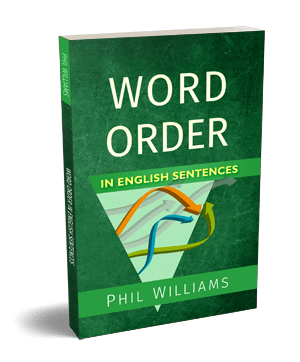
“If you are a non-native speaker intending to write in English, YOU NEED THIS BOOK!” – Amelie Chaloux , Amazon review Word Order in English Sentences teaches effective sentence structure in English. It explains how and why English word...At, in and on: prepositions of time and place
At, In and On are commonly confused because they are used in similar situations – mostly to demonstrate time and place. These notes will help you to identify the different uses of these prepositions, and to use them correctly. Describing Time At, in and on are used...For, since and ago for times – comparison and exercise
For, since and ago are all prepositions that can be used for time. When talking about time, they each cover specific times, usually to demonstrate the duration of an action or event. This article explains the difference between them, and when they can and can’t...The many cases of pronouns: subject, object, possessive and reflexive
Pronouns are used in place of a noun we already know, so we do not have to repeat names. They should make English simpler, for example saying “Bob walked home. He ate dinner.” instead of “Bob walked home. Bob ate dinner.” But pronouns can become complicated when used...Want to Master English?
ELB has produced a series of bestselling English guides, available from all major retailers, with over 45,000 copies sold worldwide. Click a cover to learn more!